
Pathway to Arduino
A structured learning path to master Arduino fundamentals from zero to real projects.
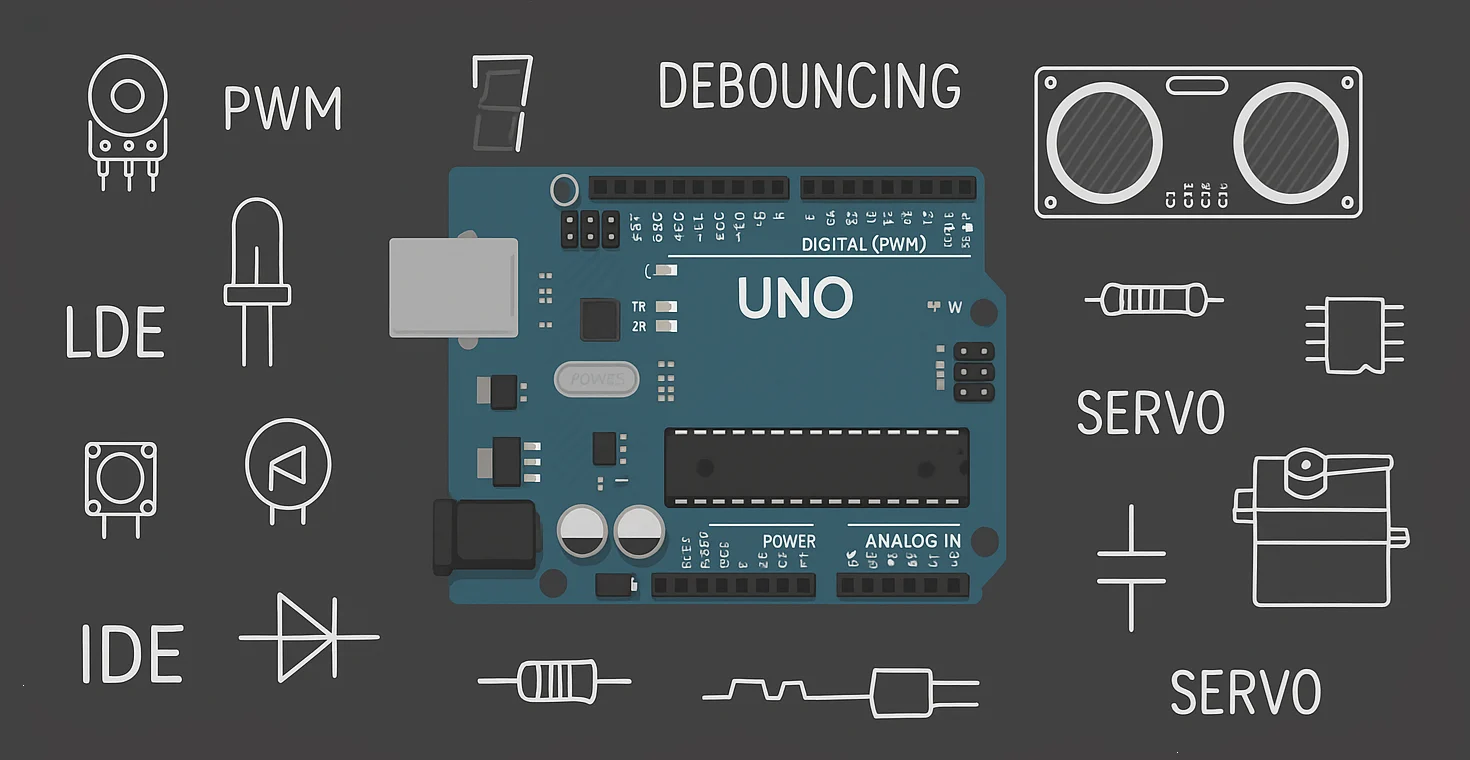
What Is Arduino?
Overview for arduino and its working.
Understanding the Arduino Uno Board
Peeking into arduino's circuits.
Setting Up the Arduino IDE
Starting up the Arduino Engine!
Blink with an External LED
Understanding the Brain and Bones of Arduino Circuits!
Understanding Digital Output
HIGHs and LOWs of the Arduino World!
Using Digital Inputs In Arduino
How Arduino Listens to the World Through Buttons, Switches, and Digital Input Signals
Debouncing: Why Buttons Misbehave
Understanding Switch Bounce and How Arduino Handles Noisy Button Presses
Analog Input: Reading Sensors with analogRead()
How Arduino Measures the Real World Through Voltage Levels and Sensors
Using Potentiometers & Mapping Values
Transforming Raw Analog Values into Useful Ranges for Real-World Control
Understanding PWM & LED Fading
How Arduino Fakes Analog Output Using High-Speed Digital Switching
Delays vs Non-Blocking Code millis()
Why delay() Freezes Your Arduino — and How millis() Frees It
Serial Monitor: Your First Debug Tool
The Window That Lets You See What Your Arduino Is Really Doing
Variables, Functions & Clean Code Structure
How to Organize Your Arduino Programs So They Stay Clean, Simple, and Easy to Fix
Loop Conditions & Decisions in Embedded Systems
How Arduino Uses Logic to Think, React, and Make Real Decisions